European Union flag
EU Space Policy

Explore EU Space

Results (62)
News
Arctic Glacier
Earth Observation | Copernicus
The Arctic Monitoring and Assessment Programme (AMAP) has released its Arctic Climate Change Update 2024 – Key Trends and Impacts the second in a planned series of comprehensive assessments of the rapidly changing Arctic climate. The report, published in June 2025, brings together the expertise of over 60 scientists, including from the Copernicus
News
burned area satellite
Earth Observation | Copernicus
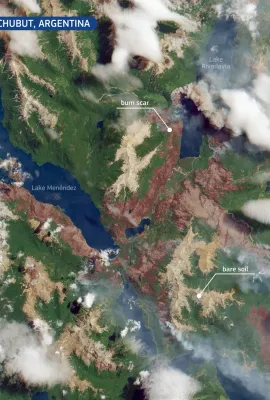
The Copernicus Atmosphere Monitoring Service (CAMS) is going through a major transition in its global fire monitoring capabilities as NASA’s long-running MODIS instruments, on the Terra and Aqua satellites, approach their retirement. Beginning on 4 December 2025, CAMS has added observations of active fires from the Visible Infrared Imaging
News
scientists
Earth Observation | Copernicus
The European Centre for Medium-Range Weather Forecasts (ECMWF) has a long-standing tradition of women in management positions. Every year, the Centre that operates the Copernicus Atmosphere Monitoring Service (CAMS) and the Copernicus Climate Change Service (C3S) pays tribute to the many women making the daily operations of this complex machine
News
Australia wildfires 2026
Earth Observation | Copernicus
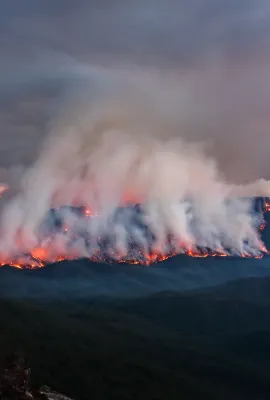
The Copernicus Atmosphere Monitoring Service (CAMS) has been tracking the high intensity and smoke emissions of wildfires burning in several countries around the Southern Hemisphere since the beginning of 2026. Fires raged in Australia’s southeastern state of Victoria in early and late January following days of record high temperatures. Up to
News
Woods fire
Earth Observation | Copernicus
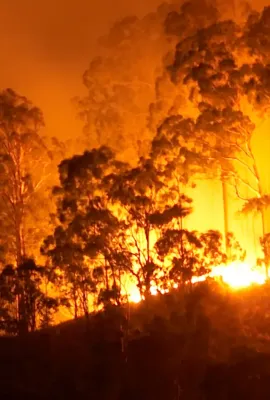
In 2025, the Copernicus Atmosphere Monitoring Service (CAMS*) continued to track wildfire emissions worldwide, offering detailed insights into fire intensity, associated emissions and atmospheric impacts. Several parts of the world saw significant wildfire activity, with record high emissions in Europe, and Canada recording its second-highest
News
Johannes Flemming
Earth Observation | Copernicus
In the third episode of our “Ask a Scientist” series, Johannes Flemming, Principal Scientist at the European Centre for Medium-Range Weather Forecasts (ECMWF), takes us on a journey to the Earth’s upper atmosphere to explain one of the most significant impacts of human activity on our planet's atmosphere: the Antarctic ozone hole.Each year, during
News
Hero
Earth Observation | Copernicus
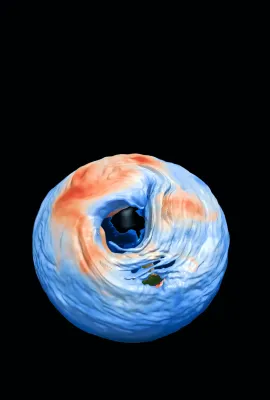
The 2025 Antarctic ozone hole has come to an end on 1 December, marking the earliest closure since 2019. The 2025 ozone hole was also relatively small for the second consecutive year compared to the large and long-lasting ozone holes from 2020-2023, and had higher ozone concentrations, fueling hopes for recovery. Several stratospheric dynamics
Service
woman in mask and with mobile phone
Earth Observation | Copernicus
More than ever, businesses & industry, policymakers and society at large need up-to-date, quality-assured Earth observation data and information to support their decision-making processes, be it to rebuild the economy after the pandemic crisis, support a green recovery of businesses, respond to the growing demand for sustainable solutions or
Service
Business sectors
Earth Observation | Copernicus
CAMS delivers consistent and quality-controlled information related to air pollution and health, solar energy, greenhouse gases and more, everywhere in the world. We provide big data with the corresponding technical and scientific expertise to help you and your business or organisation get the most out of CAMS. Together, we can empower
Service
Global map
Earth Observation | Copernicus
We deliver a range of policy products, shaped through feedback from users across Europe, and consolidated through years of research and development. We support policymakers on national, regional and local levels with a set of tools and reports that describe air quality in Europe and its evolution over the years. We offer: The CAMS Air Control
Service
France banner
Earth Observation | Copernicus
Since 2003, the French National Institute for Industrial Environment and Risks (INERIS) has been responsible for the national forecasting system, delivering air quality forecasts for the main regulatory pollutants ozone (O₃), nitrogen dioxide (NO₂), and particulate matter (PM10 & PM2.5) from the present up to five days ahead.INERIS aims to
Service
Netherlands banner
Earth Observation | Copernicus
To support national stakeholders, a refinement of the existing CAMS products is required, such as higher spatial resolution, and more regular forecast updates. Hence, we aim to provide user-oriented downscaled air quality services for the Netherlands based on existing CAMS regional products.To improve the knowledge base and quality of the Dutch
Service
Luxembourg
Earth Observation | Copernicus
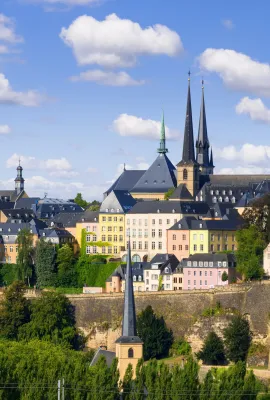
Combining data from the Copernicus Atmosphere Monitoring Service (CAMS) with local in situ air quality measurements enables a more accurate assessment of specific pollution sources and provides better insights into cross-border pollution transport and the spatial distribution of air pollution hot spots, especially in a small country like
Service
Ash storm, Iceland
Earth Observation | Copernicus
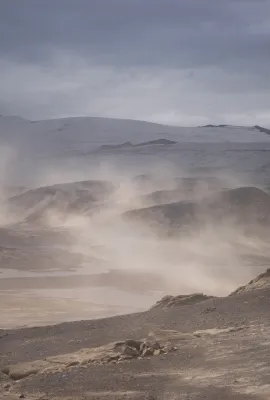
Iceland faces unique air-quality challenges shaped by its volcanic and Arctic environment. Frequent dust storms from glacial outwash plains and volcanic deserts, volcanic eruptions releasing gases and particulates, and emissions from geothermal power plants combine with local sources such as road dust and transport emissions. These natural and
Service
Norway
Earth Observation | Copernicus
The Norwegian NCP project allows for a greater use of CAMS data to support the systems that run our national air quality services (for forecasting and other tools). The project addresses key national air quality management questions ranging from sustainability to monitoring design. Collaboration with the Norwegian Environment Agency (NEA) is at
Service
Rome, Italy
Earth Observation | Copernicus
At the national level, Italy is actively pursuing various initiatives to develop, make available, and operationalise a user-driven service portfolio based on geospatial products. To explore the use of CAMS products for providing high-quality, downscaled air quality information, and to support the enhancement of Italy's national air quality
Service
Greece banner
Earth Observation | Copernicus
Greece has launched Phase II of the Copernicus Atmosphere Monitoring Service (CAMS) National Collaboration Programme (NCP), implemented by the National Observatory of Athens (NOA). The programme strengthens the use of European atmospheric data in Greece, ensuring that national needs, priorities, and user perspectives help shape the future
Service
windmills
Earth Observation | Copernicus
The Spanish CAMS National Collaboration Programme started in 2023, responding to the growing need among Spain’s air quality managers for reliable tools to monitor and predict pollution levels, in line with national regulations that require short-term action plans during high-pollution episodes.Following the adoption of the new European Air Quality
Service
Bratislava, Slovakia
Earth Observation | Copernicus
Slovak Hydrometeorological Institute (SHMU) is the public national hydrological and meteorological service in Slovakia, appointed and contracted by the Ministry of the Environment of the Slovak Republic. SHMU operates a nationwide air quality monitoring network and air quality forecast system based on the CMAQ chemical-transport model. It is also
Service
Warsaw, Poland
Earth Observation | Copernicus
Phase 1 of the National Collaboration Programme in Poland focused on establishing the foundations for the uptake of CAMS products and services. The main achievements included the development of a geoportal as the central platform for accessing atmospheric data and visualisations, the launch of a dedicated project website and social media channels

Showing 1-20 of 62 results